Comments
Dune: Part Three is going to help end the year in movies in an epic way, and fans couldn’t be more excited. The first trailers for Dune: Part Three have teased a darker and much more intense cinematic experience than director Denis Villeneuve’s previous two Dune movies. Those very artistic and visually driven films certainly made their mark, with the second film earning both big money at the box office ($715 million worldwide) and major awards acclaim.
However, Dune: Part Three won’t be a threequel in the traditional sense that a lot of fans expect. The first two films were actually a two-film adaptation of Frank Herbert’s Dune novel; Dune: Part Three will be an adaptation of Herbert’s sequel novel, Dune: Messiah. A least, it will be a loose adaptation of the book, according to the director.
Dune: Part Three Changes Explained
was in attendance at a press event previewing Dune: Part Three‘s release with a new trailer for the film. During the event, the cast and crew did interviews with the press; one of the biggest questions was how closely Part Three will follow the plot of Dune: Messiah.
According to Villeneuve, while he is walking in the footsteps of Herbert’s work, he didn’t obligated to be beholden to the novel, down to the letter. As he put it, he thought “It would be better to go back to Arrakis, not by nostalgia, but by necessity.”
That’s a poetic way of saying that he had to find his own way into the story of the next film, in order to make it feel relevant and necessary for himself. Villeneuve has acted as both screenplay writer and director of all three of his Dune films, and the first two films made it clear that he is very much crafting his own interpretation of Herbert’s story. Hardcore fans would be the first to say that the Dune movies are loose adaptations of the books, with modern themes that make the story more relevant than books written in the 1960s.
That said, Villeneuve made it clear during the press event that not only is Dune: Part Three not going to be constrained by the source material – it also won’t be constrained by trying to fit with the previous two films.
“I said to my crew, ‘I don’t want us to walk into our own footsteps,’” Villeneuve said. “I want to bring the audience into new parts of Arrakis… It’s more of a thriller. It’s more of an intense story. And it’s definitely more emotional.”
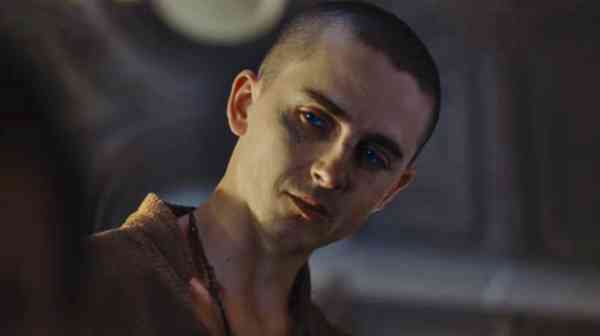
The filmmaker wasn’t the only one at the event to stress how much Dune: Part Three is going in its own direction: franchise star Timothée Chalamet reiterated his previous statements that “This is a different movie. The first two are sort of siblings. This one [has] sort of its own energy…. There’s a new tone.”
The plot of Dune: Part Three catches up with Paul Atreides (Chalamet) years after he has started a holy war, leading the Fremen people of Arrakis in a galactic jihad against the noble houses of the galactic empire. Paul has become more detached and ruthless since being anointed as “Lisan al Gaib,” the god-powered figure of prophecy, leading to conflict within his own house, alongside the war effort he is fighting. Paul’s Fremen lover Chani (Zendaya) is finding herself in opposition to her beloved, while Paul’s wife, Princess Irulan (Florence Pugh), presents a serious tension between Paul and the ruling class.
The major turn in the story sees various guilds and factions all uniting in a plot to circumvent Paul’s near-omnipotence so that they can end his threat for good. Herbert was determined to show Paul’s fall from grace after Dune; Dune: Messiah (and Part Three) reflects that darker descent.
Dune: Part Three has a release date of December 18th. Talk about movies on Forum!
One of Dune 3’s New Characters Will Change Everything for the Franchise (If WB Dares Do It)