Comments
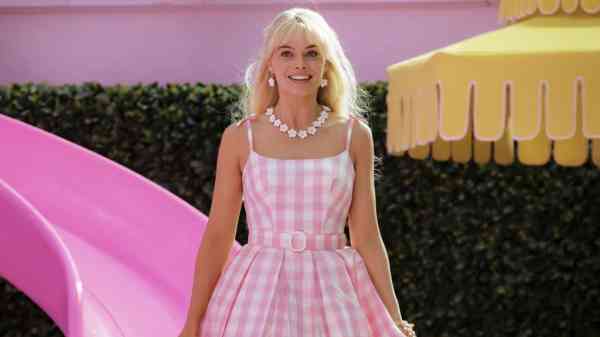
Few toys can claim the intergenerational appeal and global recognizability of Mattel’s Barbie, lately the star of her own billion-dollar hit film. It comes as no surprise that the first Barbie doll Mattel ever produced is a highly sought-after commodity, desired even by non-Barbie collectors for its place in American pop culture. This doll is so iconic that director Greta Gerwig even put it front and center in the trailer for 2023’s Barbie, making it the first look viewers had at Margot Robbie as the title character.
Produced in 1959, the original Barbie doll (dubbed “Barbie #1” by collectors) can be worth up to $27k mint in the box. But because of a minor detail, Heritage sold this loose sample last week for more than $10k. While best known today for her blonde hair, this Barbie is a brunette.
How This Barbie Doll Changed the Toy World
This is the Barbie that distributors saw at New York Toy Fair on March 9th, 1959 – a date still celebrated by Mattel as her birthday. The doll was the first sold in the United States to be modeled after an adult woman, rather than an infant or a child. Mattel has always suggested this was the secret of Barbie’s success: the doll allowed young girls to envision a future for themselves that wasn’t built around being a mother.
Distributors were intrigued by the doll, seeing potential for a new market. They were right: the toy was a breakout hit, and Barbie has been on shelves literally constantly since, a claim that no other single toyline can make. Made in an initial production run of 350,000, the dolls sold through, leading to a second run later in the year (naturally referred to as “Barbie #2” by collectors). There were two variants of the doll, blonde and brunette. Collectors estimate that roughly twice as many of the blonde Barbie #1s were made, meaning that only around 115k brunette Barbies were produced.
What Sets This Barbie #1 Apart
While almost identical to the “Barbie #2” that was released later in 1959, Barbie #1 can be distinguished by, per Heritage, her “early painted features, Japan foot marking, and copper-tubed holes in the feet for the original stand.” The holes in the feet help collectors identify a Barbie #1 versus a Barbie #2, which is otherwise extremely similar in appearance. Shared between Barbie #1 and #2 are the distinctive eyes, which set the 1959 dolls apart from later years. The white irises and arched eyebrows of the 1959 dolls would be revised by the following year to give Barbie blue eyes and a less pronounced brow.
The Barbie #1 sold at Heritage last week lacked the sunglasses and high-heeled shoes she was originally packaged with, but Heritage made sure she was still properly accessorized. Included with the auction were a collection of alternate outfits and accessories to pair with the doll, adding significant value to the listing. This consisted of pieces from four 1959 Barbie outfit and accessory sets: Evening Splendour, Let’s Dance, Suburban Shopper, and Nighty Negligee. In the case of all four, the value is increased by their being original 1959 issues: all would continue to be sold into the 1960s. Mint in box, a 1959 Evening Splendour outfit set is itself worth almost $1k to the right collector.
While the large production run means that Barbie #1 is not a rare figure, her place in toy history and pop culture means that whenever one is up for auction, it is a cause for excitement among collectors. Though a couple of dolls stand out as technically rarer or more valuable, Barbie #1 is the undisputed most desired and collectible of the thousands of Barbie dolls that have come after. As Heritage Auctions describes in the listing, “This is the doll that started it all.”
What do you think is the most iconic toy ever produced? Leave a comment below and check out our latest collectible giveaways in the Forum!
Mattel Using Generative AI for Future Barbie Line (& Other Toys)