
- Primary Subject: Overwatch Stadium Mode – Cancellation of Content Expansion
- Key Update: Covers Blizzard’s decision to stop adding new heroes and maps to Stadium, leaving the mode in maintenance while analyzing its low player share (~6%) and design limitations.
- Status: Opinion
- Last Verified: July 16, 2026
- Quick Answer: The piece argues that Stadium’s cancellation is less about the idea failing and more about Blizzard under-supporting an ambitious experimental mode that struggled to reach its potential due to limited roster access and high development demands.
Blizzard has officially decided to stop expanding Overwatch‘s Stadium mode.
While the mode will continue receiving seasonal balance updates, ranked resets, and rewards, game director Aaron Keller confirmed that Stadium will no longer get new heroes or maps.
The decision comes after Blizzard disclosed that Stadium makes up only around 6% of daily play, leaving it well behind the ever-reliable 5v5 queues as 6v6 continues carving out a larger audience.
Looking at those numbers, Blizzard’s decision isn’t especially surprising — Stadium was almost certainly the most labor-intensive mode in Overwatch to maintain.
Every new hero required entirely new powers, upgrade paths, balance testing, and interactions with dozens of existing builds.
Supporting it wasn’t as simple as slotting another hero into the rotation.
What disappoints me most is that Blizzard is moving on from the most ambitious thing Overwatch has built in years, because I don’t think the idea itself failed.
I think Blizzard fumbled what could have been Overwatch’s biggest evolution.
Was Stadium Ever Really Given the Chance It Needed?
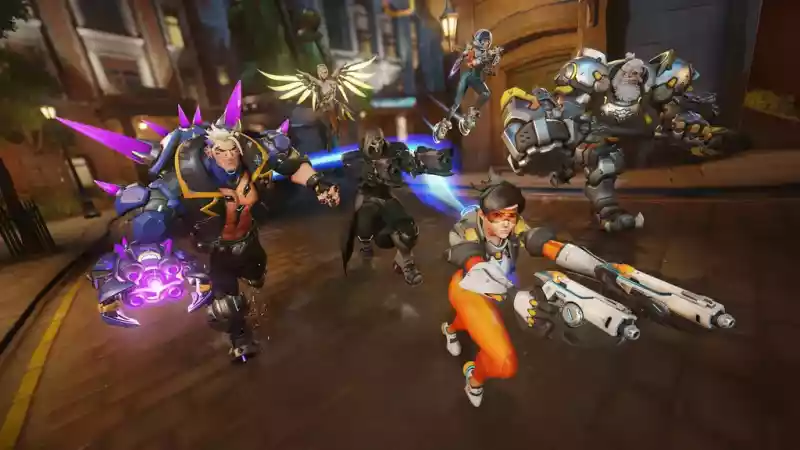
Stadium gave Overwatch a welcome streak of unpredictability that I’d forgotten it could have.

Credit: Blizzard
After years of playing the same heroes, I knew exactly what almost every match would look like.
The heroes still felt great to play, but their roles had become so well understood that most team fights unfolded almost exactly as I expected.
Stadium threw all of that familiarity out the window. Instead of simply picking a hero, I was building one round by round.
Abilities evolved over the course of a match, cooldowns changed, powers stacked together in unexpected ways, and heroes started behaving nothing like their standard versions.
Some builds felt completely unhinged, yet that constant sense of discovery made Stadium difficult to put down.
It reminded me of why I fell in love with hero shooters in the first place.
There was something strangely addictive about constantly discovering new builds, even if some of the most memorable matches came from getting steamrolled by something completely outrageous.
Stadium constantly gave me stories that standard Competitive simply couldn’t. The problem is that Blizzard asked Stadium to become a permanent pillar of Overwatch while giving it one enormous disadvantage.
It never had the full game. When Stadium launched, it supported just a fraction of Overwatch’s roster.
Blizzard eventually expanded that number considerably, but even now nearly twenty heroes are still unavailable.

Credit: Blizzard
That’s a huge obstacle for any hero shooter because players rarely see heroes as interchangeable — they usually have one they genuinely call their own.
If your favorite character isn’t supported, there’s a good chance you’ll simply return to the regular game.
At the same time, I understand why Blizzard couldn’t move faster because each new hero came with an entire layer of design work attached to them.
New powers had to feel exciting without breaking the mode completely, while also interacting with dozens of existing upgrades.
That’s an exhausting amount of design work compared to balancing the core game.
I think Stadium boxed itself into an impossible position — it needed constant expansion to stay relevant, yet every expansion came with an enormous development cost.
Once the stream of new content began drying up, so did the player base.
Judging Stadium purely by participation feels a little too neat for a mode whose biggest problems were tied to how it was supported.
I don’t think Blizzard should have ignored the numbers. Six percent of daily players is difficult to justify when developers could instead work on modes that attract significantly larger audiences.
So I don’t think Blizzard is misreading the numbers — I think it’s misreading what those numbers are actually saying.
To me, Stadium proved that Overwatch still has room to evolve beyond simply debating whether 5v5 or 6v6 is the better format.
Those discussions matter, but they mostly boil down to where players stand, not how they play.
Stadium was trying something much more ambitious. It experimented with progression, hero customization, long-term strategy, and builds that changed how familiar characters actually played.
That’s the part I don’t want Blizzard to forget. I’ve seen plenty of discussion over the past few months arguing that Stadium became repetitive, while others insisted recent updates were actually the mode’s most balanced yet.
If I’m being fair, I think there’s merit to both arguments. Stadium was always going to be messy because experimentation naturally creates imbalance.

Credit: Blizzard
The challenge wasn’t eliminating that chaos altogether — it was making sure enough variety existed that no single strategy stayed dominant for too long.
I actually thought Blizzard was getting closer. The later updates showed a better understanding of how Stadium worked, with weaker heroes receiving more viable options and several oppressive builds being toned down.
It wasn’t perfect, but it finally felt like the developers were learning the language of their own mode.
I’m left with the impression that Blizzard mistook growing pains for a dead end. Just as Stadium seemed to be finding its footing, Blizzard has decided it’s no longer worth growing.
Maybe those developers really will take everything they learned and build something even better.
I genuinely hope that’s what happens because Stadium deserves to be remembered for more than a discouraging player count.
It demonstrated that Overwatch’s heroes can support far more creativity than the core game usually allows.
When I look at Stadium, I don’t see a failed experiment — I see an ambitious idea Blizzard gave up on before it ever had the chance to fully grow.
It’s entirely possible Stadium was never going to compete with Overwatch’s main playlists — but I’m not convinced it was ever given the chance to try.
Instead of asking why only a small percentage of players stayed, I think it’s worth asking whether the mode ever received enough support to become the third pillar Blizzard originally wanted it to be.
video player
For more like this, stick with us here at Gfinityesports.com, the best website for gaming news, reviews, features, and guides.