ProtoplasmaKid
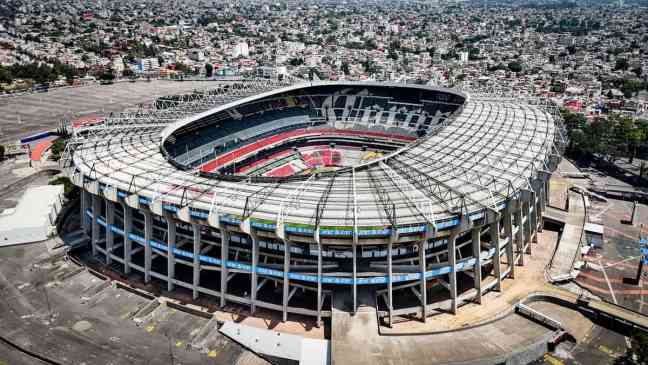
The Estadio Azteca stadium in Mexico City will host the opening match of the 2026 World Cup, but it’s currently thought to be sinking due to unstable land nearby.
We are now one month out from the start of the World Cup, but there are growing safety concerns over one of the key venues that’ll be involved in hosting teams from all over the globe.
The opening game of the summer tournament, a clash between Mexico and South Africa on June 11, is set to be played at the Estadio Azteca, but a sinkhole in the vicinity is causing problems.
Estadio Azteca in Mexico City affected by sinkhole
Fan footage emerged during a Mexican cup quarter-final tie between Club America and Pumas UNAM on Monday, with supporters finding loose bits of concrete around the stadium. This was even the case in a newly-renovated section of the ground, too.
One fan grabbed a large chunk of concrete and told the camera, “I have a souvenir from the match.”
However, there are fears that this issue could get a lot worse. While plenty of work has been done to get the 72,000-seater ground up to specification for the World Cup, a sinkhole was discovered nearby back in March.
Roads and pavements being dug up and relaid around the stadium, but the sinkhole has caused all kinds of issues, including an incident where a Coca-Cola truck got stuck — all while FIFA representatives were inspecting the ground.
There is an explanation for this. Mexico City is built on an ancient lake bed and as such, the city has one of the fastest subsidence rates in the world. That literally means the ground in Mexico City is sinking at a faster rate than most other cities, so this concerning development should not come as a surprise.

FOX is hiring a “Chief FIFA World Cup Watcher” to watch every single match

BuzzBallz unveils eight limited-edition World Cup SoccerBallz cocktails
Across Mexico City, buildings are leaning, water pipes are breaking, while roads and train tracks are warping. As a result, NASA has been asked to investigate, with high-tech radar technology being used in space to look down and track movement in the Earth’s surface.